9 Agentic-Coding Hacks We Use Every Day at BrainAI
Agentic coding is different from writing code. Here are the nine habits that keep our agents shipping working software instead of running in circles.

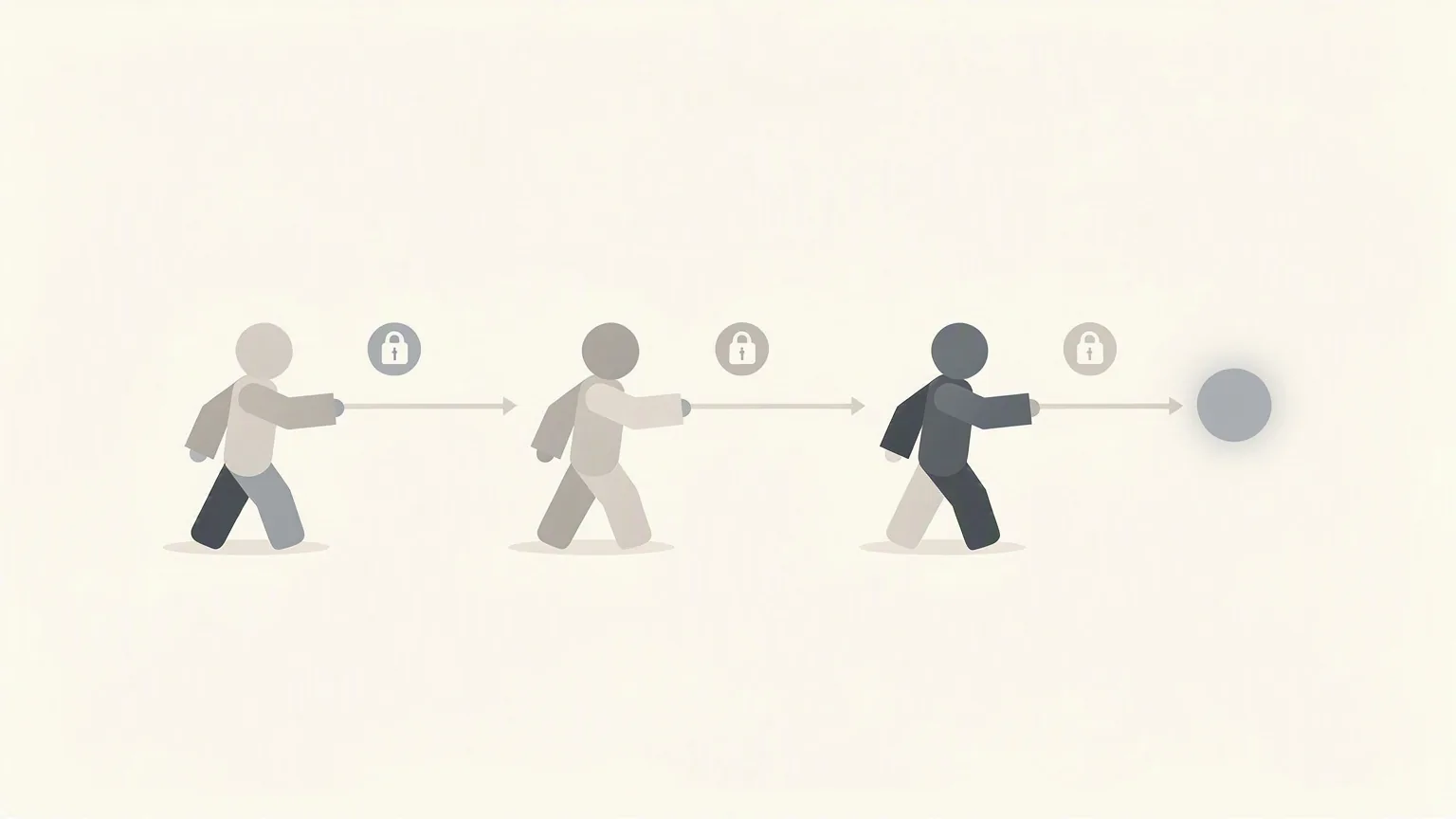
Agentic coding is not vibe coding with more tokens. It is a different job. The model is not helping you write code, it is actually executing work: reading files, running commands, editing your codebase, deciding what to try next. If you treat it like autocomplete, you get autocomplete quality. If you treat it like a junior engineer with infinite energy and no memory, you get a lot done.
Here are nine habits we use every day at BrainAI to keep agentic-coding sessions from turning into thrash.
#1. Delegate research to sub-agents, keep your main context clean
Your main agent's context window is finite. Every unrelated file it reads, every long stack trace it processes, every failed rabbit hole eats into the budget you need for the actual task.
Push exploration to a sub-agent. "Find where this symbol is used." "Compare our approach to the docs for library X." "Read these three files and summarize the interface." The sub-agent burns its own context to a fine ash. You get back a two-paragraph answer.
The main agent stays fresh for the work that requires the whole picture in one place.
#2. Front-load the pre-flight
Before the agent touches anything, it should run three commands: git status, git log --oneline -5, and whatever "show me the current state" command applies to the project (docker ps, pnpm list, curl /health, whichever fits).
Skip this and you get agents that helpfully commit on top of uncommitted work, or start from a stale branch, or "fix" a service that was already fixed twenty minutes ago and just needs a restart.
Ten seconds of orientation prevents twenty minutes of undoing.
#3. One shot with the full spec beats iterative discovery
If the model has to guess what you want, it will build the wrong thing twice before it builds the right thing once. Cheap in autocomplete. Expensive when the agent is running commands.
Write the whole spec upfront. Inputs, outputs, edge cases, file paths, error behavior, what not to do. Paste it once. Let the agent execute against a complete brief.
You are not "iterating on requirements." You are turning a thought into a specification so a machine can act on it. Do the specification work first, on your side of the keyboard.
#4. Kill and restart when the context turns dumb
Long sessions rot. You will notice it: the agent starts referencing files that do not exist, forgets a decision you made an hour ago, or repeats the same mistake it just apologized for.
That is not a model getting worse. That is a context window that has accumulated too much noise for the signal to survive. The fix is not more prompting. The fix is a fresh session.
Write a short handoff, kill the session, start a new one from the handoff. Every long agentic task should be a chain of small clean contexts, not one big polluted one.
#5. Use the model for plumbing, keep design decisions human
The model is excellent at plumbing: writing the fifth API route that looks like the other four, translating a config from YAML to JSON, adding a null check in eight places consistently. Delegate all of that.
The model is unreliable at design: whether to introduce a new abstraction, whether a feature belongs in this service or the next one, whether a data model change is worth the migration cost. Keep those on your side.
The bad outcomes come from the reverse: humans hand-writing boilerplate and asking the model "what should the architecture be." You get slower delivery and worse design in one move.
#6. Rotate models for adversarial verify
We write with Claude and review with Gemini, or the other way around. Same task, different eyes. The reviewer's job is to try to break the diff: find the edge case, name the assumption that will fail, spot the "clever" refactor that quietly changed behavior.
A single model's blind spots are consistent. It will not catch its own failure modes on a second pass, because the failure modes are baked into how it thinks. A different model has different blind spots, so overlap catches real problems.
Adversarial verify is the cheapest quality gate we have. It takes one extra prompt, and it kills a category of bugs before they reach a human reviewer.
#7. Structured output beats free-form parseable text
If the agent's answer feeds into anything downstream, define the schema and force the model to fill it. JSON with a validator that retries on mismatch. Not a template with instructions. Not a "please respond in this format."
Free-form text that looks parseable is not parseable. Some percentage of the time the model will helpfully add a preamble, or trail off, or interleave prose with the fields. Your parser catches half those cases in test and none of them in production.
Structured output is a contract. Sign it explicitly.
#8. Read the file, do not cat the file
Every agent runtime has a Read tool that returns the file with line numbers and offset control. Use it. Do not shell out to cat, head, sed, or awk for reading.
The dedicated tool is faster, easier to review, and gives the model line anchors that make follow-up edits precise. Bash for reading is a habit from the terminal era. In an agent context it produces worse diffs and more tool errors.
The same rule applies to editing (Edit over sed), writing (Write over echo >), and searching (Grep over find ... | xargs grep). Bash is for shell things. Dedicated tools are for everything else.
#9. Every long task writes a session handoff
Agent sessions end. Sometimes because the task finished. Sometimes because the context filled. Sometimes because a wake-timer fired the wrong reason and the session rotated. All three happen.
The task that assumed one continuous session dies when the session dies. The task that ends every checkpoint with a two-paragraph handoff picks up cleanly on the next run.
The handoff is not documentation. It is a note to your next self. What was done, where you left off, what the specific next action is, which files were touched. Written for someone with no context, because the next session has none.
#The pattern behind the hacks
Agentic coding rewards the same thing every other engineering discipline rewards: preparation and hygiene. Specifications ahead of execution. Fresh contexts over accumulated ones. Structured contracts over hopeful parsing. Human judgment on the decisions that matter, machine effort on the ones that do not.
None of these are exotic. Most of them are what a careful senior engineer would do anyway. The difference in agentic coding is that skipping them is even more expensive, because the model is not just suggesting bad code, it is running commands, editing files, and shipping your name.
If you want a team of agents to actually run your work, the habits are the whole game.
Want to see this applied to a real business? Get started with a Free Technical Analysis and we will map where an agentic workflow fits your operation.