Stop Reviewing Your AI Agent's Output. Review Its Inputs.
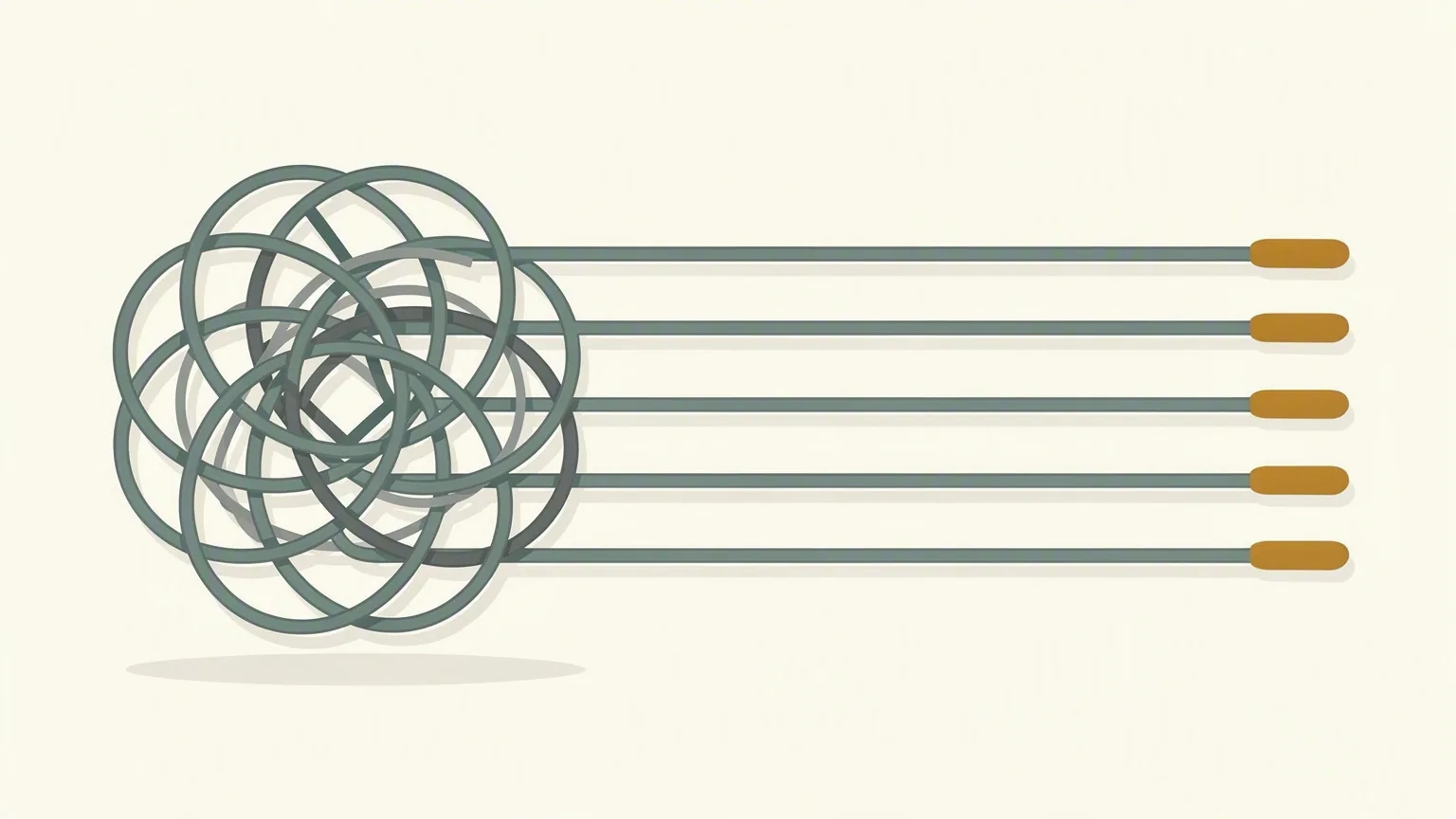
Most teams review what their AI agent produced. That is too late. The mistake was already made. The place to catch it is the request that went in, not the artifact that came out.


Every team we work with has an output review process for their AI agent.
They read the emails before they go out. They skim the code before it merges. They approve the images before they ship. It feels responsible. It looks responsible. It is mostly theater.
By the time the artifact exists, the mistake is already made. The wrong assumption has already been baked in. The reviewer's job is now to spot a defect that has been carefully wrapped in a professional-looking deliverable. Sometimes they catch it. Often they do not, because a 900-word email that reads well is exhausting to actually pressure-test.
The place to catch the mistake is one step earlier. Review the input, not the output.
#What "review the input" actually means
Every task an AI agent runs starts with a request. Sometimes the request is a natural-language message from you. Sometimes it is a trigger from an inbox rule or a scheduled job. Sometimes it is another agent's handoff. Whatever the shape, it is text or structured data that goes in before any work begins.
Reviewing the input means: before the agent starts working, someone (or something) checks whether the request itself is well-formed, whether it makes sense in the current state of the operation, and whether it matches what the requester probably meant.
Concretely, that means answering four questions:
- Does the request name a specific outcome, or is it vague?
- Does the current state of the system make the request applicable?
- Are the numbers, names, and references in the request internally consistent?
- Does the requester have authority to ask for this?
If any of those four fails, the agent should not start.
#Why input review is cheaper than output review
A bad input generates a bad output every time. Sometimes it generates a bad output that looks convincingly correct. That is the worst case, because it slips past the reviewer.
A good input generates a good output most of the time. Failed generations are usually visibly broken and the agent will surface them itself.
So the math is stark. Fixing the input costs you one focused check per request. Fixing the output costs you a full artifact review per request. The input version is faster, catches more, and produces less rework.
#What input review looks like in practice
You do not need a new tool. You need three things, and they belong at the beginning of every agent's task flow.
#1. A parse step
Before the agent does anything, it restates the task in its own words and lists the fields it thinks are load-bearing. Not a long explanation. Two or three lines.
"Task: send the invoice for the June retainer to Acme Corp. Amount: 2,400 dollars. Payment terms: net-30. Send to: [email protected]."
If any of those four items are wrong, you catch it in five seconds. If they are all right, the agent has already anchored itself before starting. Free win either way.
#2. A precondition check
Some tasks require the world to be in a particular state. The agent should verify that state exists before running.
If the task is "send the July invoice," the precondition is "the June invoice was paid." If not, escalate.
If the task is "run the payroll report," the precondition is "all timesheets for the period are submitted." If not, pause.
Preconditions catch the class of error where the request was reasonable at the time it was written but the world has moved on since. Which is most of them.
#3. An identity check on the requester
Not every agent needs formal authentication. Every agent should still ask: is this request coming from someone who is authorized to trigger this class of work?
The homeowner can ask the agent to send a follow-up email. Not everyone can. A request that would touch billing or contracts or external partners should verify who sent it before executing.
This one line, in the system prompt, prevents the entire category of "the intern accidentally triggered the CRM cleanup" incidents.
#What you stop doing
Once input review is in place, output review becomes lighter. Not eliminated. Lighter.
You are no longer scanning a full artifact for defects. You are spot-checking that the output matches the input that already passed review. That is a different, faster mental task. It is closer to "does this shape match" than "is this actually correct."
Which means one person can review five times as many agent outputs per hour, and catch more of the real defects, than they could when they were reading everything word-for-word.
#The pattern behind unattended runs
Input review is also the mechanism that lets you leave the agent running overnight without watching it.
If every task passes through parse, precondition, and identity before starting, you get to sleep knowing that any task the agent completes is one that already passed a real check. The worst-case output is a task that was going to run correctly given a correct input and did.
That is not the same as "the agent is safe to run unsupervised." It is the same as "the tasks the agent will attempt are ones you would have approved." Which is enough.
#Where to start today
Pick one class of task your agent currently handles unsupervised. Write down the parse, precondition, and identity check for that task. Add them to the front of the task flow.
Run it for a week. Measure how many tasks get blocked at the input stage. If the number is zero, your checks are too loose. If it is above ten percent, they are too tight. Adjust from there.
Then repeat for the next task class. In a month you will have covered the ones that actually matter.
The reviewer at the front of the pipeline catches more than the reviewer at the end. Move the check.
If you want an agent team where every task is input-checked before it runs, talk to us. We build that in as the first layer, not the last.