9 Vibe-Coding Habits That Separate People Who Ship From People Who Tinker
Vibe coding is easy to start and hard to finish. These are the habits that turn a two-hour prompt session into shippable software.

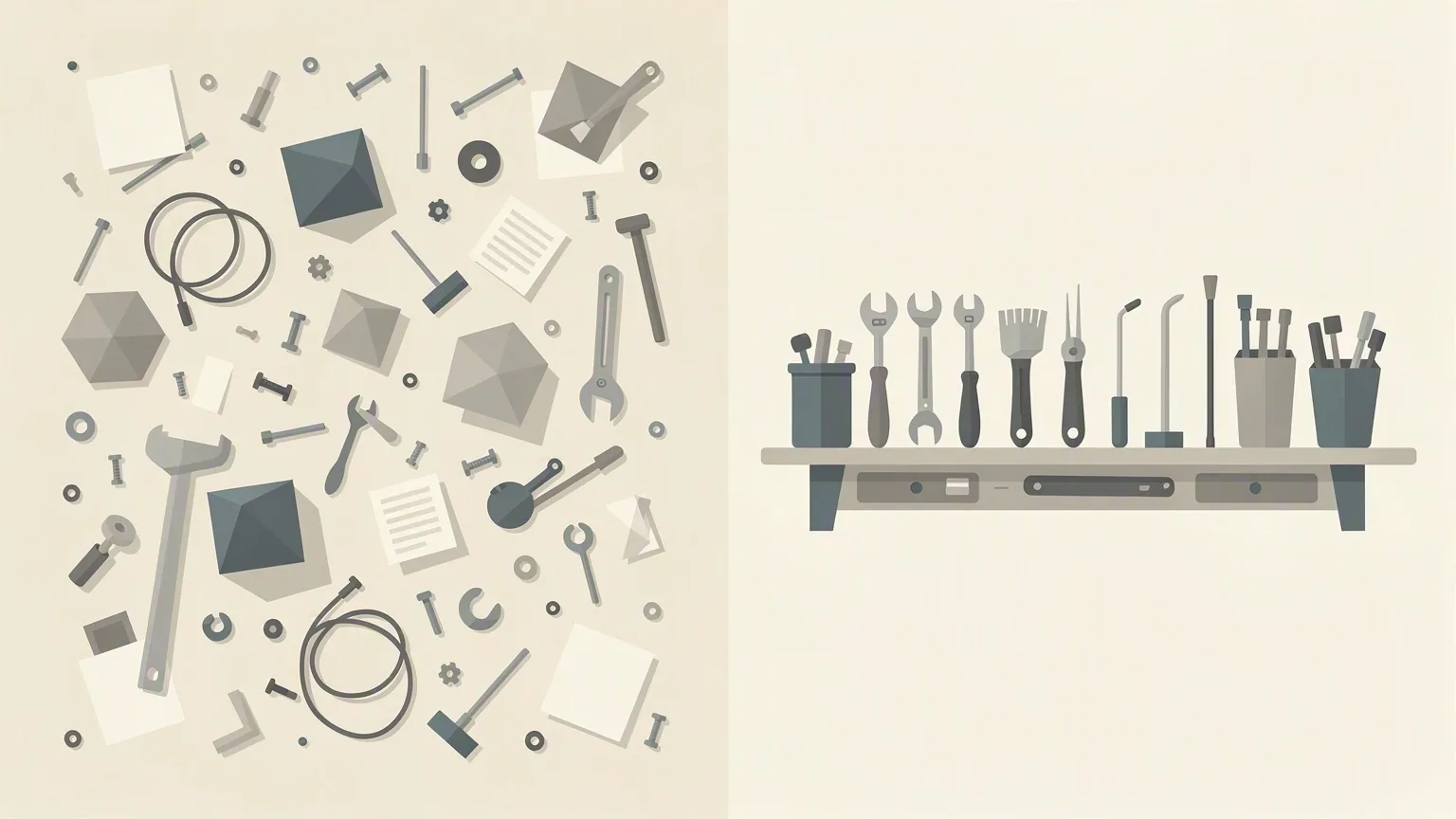
Vibe coding gets you 60% of the way to something that works in about 20 minutes. The remaining 40% is where most people either quietly give up or ship something buggy. The gap between the two is not talent. It is habits.
Here are nine we use every day at BrainAI to keep vibe-coding sessions from turning into two-hour rabbit holes.
#1. Start with a one-paragraph spec, not a prompt
Before you touch the model, write one paragraph describing what you are building. Not headings, not bullet points. A paragraph. What is the input, what is the output, what is not in scope.
If you cannot write it, you do not understand it yet. Prompting a model into something you do not understand yields code you cannot read.
The paragraph goes in the first prompt as-is. Everything else in the session is a delta on that paragraph.
#2. Show the model the shape before you ask for behavior
When you paste code, do not paste one file. Paste the file plus a tree output of the directory it lives in, plus the exports of any file it imports from. Three inputs, in that order.
The model does not know what your codebase looks like unless you tell it. It will guess. Its guesses will be plausible and wrong. Show it the shape and it stops guessing.
Twenty seconds of setup saves you six rounds of "wait, that import path does not exist."
#3. One turn, one change
The temptation is to ask for six things at once because you can. Do not. Ask for one change per turn. Read the diff. Accept it or reject it. Then ask for the next one.
Multi-change turns make bad diffs, and bad diffs waste more time than they save. You cannot review what you did not read. Reading a 400-line diff after five prompts is how bugs get shipped.
#4. Never accept a diff you cannot explain out loud
Before you paste the output back into your editor, say out loud in one sentence what the change is doing. If you cannot, do not commit it. Ask the model to explain. Or ask for a smaller version.
You are not a bystander to your own codebase. Every line you commit is a line you are on the hook for. That is not paranoia. That is professional software.
#5. Keep a running scratchpad open
Not in the codebase. In a separate window. When you notice something during the session ("this component is weird, TODO: split it"), write it down there. Do not fix it in the current turn. Do not ignore it either.
The scratchpad is what you actually clean up in the last 20 minutes of the session. It is the difference between shipping a feature and shipping a feature with three known-broken edge cases and no memory of them.
#6. Verify by running, not by reading
The model can produce beautiful code that does not run. Or code that runs but does the wrong thing. Or code that does the right thing on the happy path and crashes on the edge case you did not think about.
Every turn: paste the code, run it, watch it happen. If you cannot run it (backend, deploy, whatever), write the test that would run it, and run the test.
"It looks right" is not verification. "I saw it work on my inputs" is.
#7. Reject the second-draft trap
You will get a version that mostly works. You will ask for one more round of polish. You will get back something worse. The model will have "improved" the working parts and broken them.
When the code works, stop. Do not ask for one more round. The next round is a coin flip on whether it stays working.
If something needs to change, be surgical: name the specific line, name the specific change. Do not say "make it better" or "clean it up." Those are prompts that ask the model to guess what you want, and it will guess wrong roughly half the time.
#8. Every session ends with a commit or a delete
At the end of every vibe-coding session, you either commit what you built or delete the branch. Nothing sits in a half-finished state on your machine for a week.
Half-finished vibe-coded work is where the worst debt lives. Three weeks later you come back, you cannot remember what the prompt was, you cannot remember which parts were yours and which parts were the model's, and you cannot tell whether the code was left broken on purpose or by accident.
Commit and describe, or delete and move on. Never leave a session in an ambiguous state.
#9. Use your own real inputs, not example ones
The model will happily write code for the example JSON it invented in your prompt. That code will fail on your real data because your real data has a nested field you forgot to mention, a null the model did not account for, or a string that looks like a date but is actually a duration.
Ten seconds of pasting your real input beats twenty minutes of debugging why the "working" code does not work on production data. Every vibe-coding session should have at least one real, unedited input in the context window.
#The pattern behind the habits
Look at all nine and there is one thing in common. Every habit forces you to stay in the loop. To make a decision, read a diff, run the code, commit a change.
Vibe coding is not autopilot. The productivity comes from removing the mechanical typing, not the thinking. The people who ship from vibe-coding sessions are the ones who kept thinking. The people who tinker are the ones who tried to skip it.
#What we do with this at BrainAI
Half our internal tools started as a Sunday-afternoon vibe-coding session. All of them shipped because we were rigorous about habits like these. When we build agentic systems for clients, we bring the same habits: small changes, real inputs, verified outputs, committed at every step.
If you are running a business and you want vibe-coded prototypes to become real software, talk to us. We turn one-paragraph specs into shipped systems, and we do it in weeks, not months.